Sono state memorabili le parole scritte da Wolfgang Münchau sull’FT del 15 gennaio (http://tinyurl.com/6sbfhat). Mi permetto di iniziare questo aggiornamento quotando la parte finale del suo commento, fondamentale per commentare ulteriormente – nonostante l’ottima performance YTD di molti risky assets – lo scenario di questo inizio 2012:
I argued a while ago that the December summit was the last chance for a comprehensive systems reboot. Back then, one could have envisaged a grand bargain that combined a joint eurozone-level budget, a eurobond, a policy regime to address intra-eurozone imbalances and, in this context, also hard national budget constraints. Ms Merkel and her acolytes in Berlin and Brussels celebrated the outcome of the December 8-9 summit as a victory because it included none of the above, except the budget balancing component. Now that she has got everything she wanted, the system continues to unravel. With each turn of the spiral, the financial and political costs of an effective resolution increase. We have moved past the point where electorates and their representatives are willing to pay the ever-rising costs of repairing the system. Last week a couple of senior parliamentarians from the ruling CDU party, whom I had previously considered voices of moderation, argued that a Greek exit from the eurozone would not be such a big deal. Expectations are changing quickly, and so is the acceptance of a violent ending. And no, the European Central Bank’s huge liquidity boost is not going to fix the problem either. I do not want to underestimate the importance of that decision. The ECB prevented a credit crunch and deserves credit for that. The return of unlimited long-term money might even have a marginal impact on banks’ willingness to take part in government debt auctions. If we are lucky it might get us through the intense debt rollover period this spring. But a liquidity shower cannot address the underlying problem of a lack of macroeconomic adjustment. Even economic reforms, necessary as they may be for other reasons, cannot solve this problem. This is another European illusion. We are now at a point where effective crisis resolution would require a strong central fiscal authority, with the power to tax and allocate resources across the eurozone. Of course, it will not happen. This is the ultimate implication of last week’s ratings downgrades. We have moved beyond the point where a technical fix would work. The toolkit is exhausted.
Market-wise, anche oggi il rendimento dell’equity intraday è sostanzioso: Eurostoxx 50 guadagna l’1.49%, l’S&P 500 è su dello 0.76% e anche il Brasile performa bene (+1.38%). In Asia, la Cina ha fatto +4.2% dopo che i dati attesi ieri sul PIL hanno sorpreso al rialzo le aspettative (+8.9% vs. 8.7%): tuttavia, questa statistica segnala che la politica monetaria di Pechino continuerà a essere selettiva e non estremamente aggressiva. Potenzialmente questo è un “negative”, ma è d’altro lato è “positive” il fatto che Pechino – proprio ieri – abbia dato risposta positiva ad alcune proteste che citavo (http://t.co/1WpvPMm2).
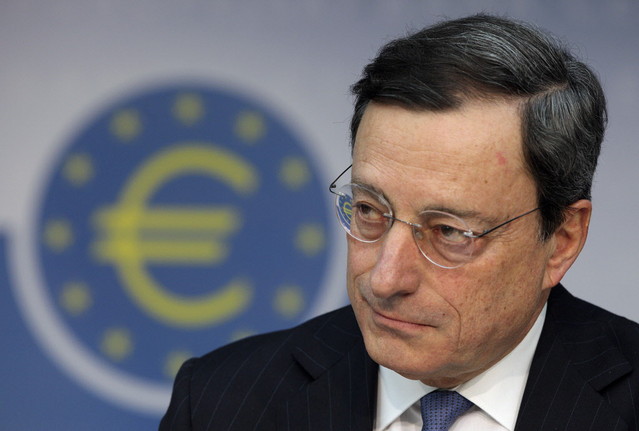 Riporto alcune informazioni di mercato perché diventa sempre più importante capire se quello che stiamo vivendo sia un rally strutturale o se ciò che sta accadendo da inizio anno sia semplicemente la continuazione di uno short-covering iniziato a fine novembre e stimolato dall’azione coordinata delle principali banche centrali mondiali per alleggerire il peso sul funding in dollari. A questo proposito, quando venerdì scorso parlavo di “Alcuni risk (on/off) triggers” mi ero permesso di citare alcuni possibili eventi che avrebbero condotto a una ripresa più “sentita” dell’appetito per il rischio. L’azione della Banca Centrale Europea è certamente un possibile “contributor” positivo, e credo che all’interno dei corridoi della sede di Francoforte si stiano già preparando a qualche altra azione decisiva e tempestiva nel caso si concretizzino gli eventi negativi da me citati venerdì.
Per lo meno, Draghi è consapevole della gravità della situazione: ECB’s Chief Warns Situation Is “Very Grave”. Manterrei quindi un atteggiamento di trading: “sell on strenght, buy on weakness”.
 The Daily Snapshot